
Today’s employers often face a problem: The skills they need often don’t match the skills potential employees have. Meanwhile, technologies like AI are accelerating change in the economy — meaning businesses need to adapt their hiring, education, and training practices to stay competitive.
Navigating these challenges requires a new perspective that sees people for more than their titles or pedigrees.
For employers, emphasizing people’s potential can boost engagement, productivity, and retention. For employees, it can increase their motivation and sense of purpose at work. It’s a win-win scenario that enables both parties to navigate the uncertainty around AI and other emerging technologies.
“One thing is clear: Investing in human potential and creating opportunities for people across the broadest range of backgrounds and experiences isn’t just the right thing to do — it’s essential in this age of disruption and transformation,” said John Lullen, the director of marketplace inclusion at TEKsystems, a company with over 20,000 employees that provides IT and business services across multiple industries.
A new movement centers on this fresh take on the future of work. The Human Potential Network aims to define workers’ true potential by their natural talents, acquired skills, and unique motivations, rather than their backgrounds and titles. This shift could generate value for both employers and employees by uniting them to create purpose-driven workplaces.
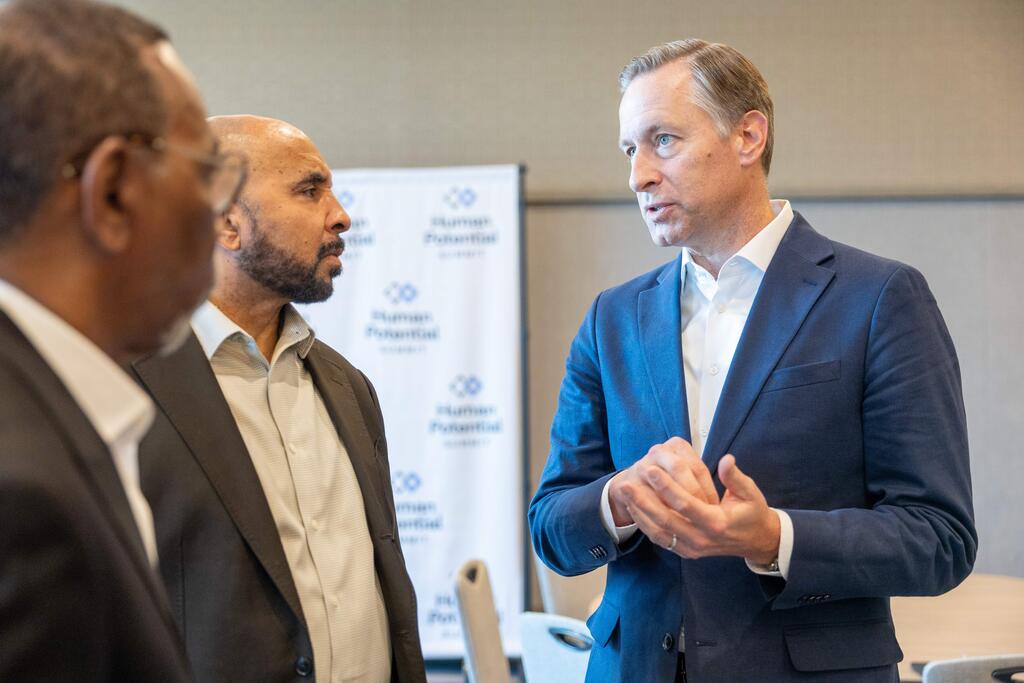
The Network launched at the Human Potential Summit in Deer Valley, Utah, in November. During the event, over 200 business, education, and workforce development leaders from a diverse range of industries and company sizes gathered. The goal? To reimagine how companies unlock human potential in a rapidly changing world.
Here are four of the biggest takeaways:
1. Businesses must drive the future of work
Henry Deng — the strategic partnerships lead, private and public sector at Google — said businesses find themselves “in an era of intense change,” especially due to AI. To navigate the future of work, Deng recommended that businesses value skills such as leadership and organization, problem-solving and innovation, and communication and collaboration.
“The one constant right now is still really human skills and durable skills,” he said.
Ryan Stowers, senior vice president at Stand Together, added that “in many ways, we are living during unprecedented times.” Stand Together is a philanthropic community that helps America’s boldest changemakers tackle the root causes of our country’s biggest problems.
Stowers said that companies must lead the charge in shaping the future of work to maintain their competitive advantage amid such challenges as economic anxiety, the upheaval caused by AI, and rising labor shortages and retirements.
“Never before has it been more crucial to double down on the immeasurable potential of people,” he added.
2. People should see themselves in the new economy
The power of purpose in the workplace was another recurring theme. New research unveiled by Gallup at the Summit found that workplace purpose leads to better individual employee experiences and improved organizational outcomes for employers.
Gallup found that employees who believe they have a purpose in their work drive better workplace outcomes.
It also discovered that 50% of U.S. working adults with a strong sense of purpose at work are engaged. Only 13% of this group reported being burned out “very often or always,” and just 41% said that they’re watching for or actively seeking new jobs. In contrast, 38% of people with a low sense of purpose at work said they’re burned out “very often or always,” and 68% said they’re watching for or actively seeking new jobs.
Gallup’s findings suggest that employers who help their workers cultivate purpose could experience higher employee engagement and productivity, as well as lower turnover.
Larry Miller — the chairman of the Jordan brand at Nike — discussed changing the hiring mindset around people who have experienced the justice system. Miller built his career after spending more than four years incarcerated in a prison for young offenders.
Miller said when companies view individuals who have experienced the justice system as having potential and provide them with opportunities to launch their careers, it can have a lasting impact beyond the workplace. He added that offering people who have experienced the justice system more professional opportunities can reduce the recidivism rate, ultimately making communities safer.
“In this world, talent is distributed equally, but opportunity is not,” Miller said.
Sign up for Stand Together's Rethinking Work & Learning newsletter to get the latest stories, ideas, and trends on the future of employment.
3. The time to reinvest in people is now
As technologies such as AI transform the economy, humans must remain the anchor of tomorrow’s workplaces.
Gena Pirtle, the founder of The People Equation, noted that productivity, performance, and profits are some of the ways that hiring centered on human potential can help businesses keep their competitive edge in an ever-evolving economy. The People Equation is a strategic HR consulting and team training firm that helps organizations reduce their turnover. Before founding The People Equation, Pirtle worked as a global leader at Cisco, a digital communications technology corporation.
“It’s important, especially in this age of AI, that we don’t forget the importance of people and creating more human-centric workplaces,” she said.
4. Reshaping the talent ecosystem takes a community
For years, many employers have treated college degrees as a key measure for evaluating talent.
More than 70% of new jobs require a bachelor’s degree. While these credentials can be helpful, they can also exclude qualified candidates or discourage them from applying for jobs.
Over 70 million working adults in the United States — roughly half the nation’s workforce — are “skilled through alternative routes.” While these individuals may not possess four-year degrees, they have acquired and honed their skills for jobs through pathways such as apprenticeships.
And the employer ecosystem is taking notice — 87% of surveyed business executives said workers with alternative credentials bring value to the workplace.
Reshaping the talent ecosystem to focus on what people can achieve rather than traditional benchmarks will require companies, workforce innovators, and education partners to collaborate and innovate.
Kesha Ivory-Darnell is the people programs manager at RB Global Inc. RB Global is a global omnichannel marketplace for buying and selling commercial assets and vehicles. Ivory-Darnell said that during the Summit, she discussed topics such as talent attraction and development, culture, retention, and partnerships with other attendees.
“The Summit created space for industry and workforce partners to roll up our sleeves, learn from one another, and examine emerging trends through the lens of our own companies,” she said.
The push for human potential
The Summit served as a reminder that no matter how much the economy or technology changes, the unique potential each person has can’t be replaced.
Leaders from at least 10 sectors attended the event, including financial and professional services, health care, and technology and software. The Summit also attracted people in HR leadership roles, including senior talent strategy leaders, senior business unit leaders, and mid-level talent strategy leaders.
While some employers are already leveraging innovative hiring and professional development strategies, no two organizations are the same.
Stowers said celebrating people’s potential doesn’t just help them improve their lives and achieve their dreams — it can also better society and the economy.
“The business case for talent transformation is the thrust behind all of this,” he said.
Help shape the Human Potential Network by subscribing to its monthly newsletter.
The Stand Together community partners with changemakers who are tackling the root causes of America’s biggest problems.
Learn more about Stand Together’s efforts to transform the future of work and explore ways you can partner with us.

Gallup research reveals the benefits of purpose at work and what employers can do to foster it.

New research shows what it takes for employers to meaningfully transform their hiring practices.

HXOUSE is helping young creatives dream bigger and realize the potential they never knew they had.
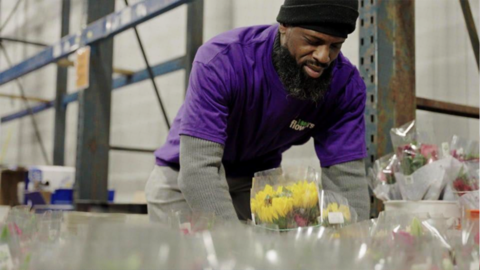
To meet holiday demand, the company teamed up with an innovative staffing agency.