
Raelynn Franklin’s arms were shaking and burning with effort.
“I can’t do it,” she said, fighting back tears. Franklin was on the side of Lizard Rock, a 60-foot-tall spire of sandstone in Moab, Utah. While she was attached to safety ropes that would catch her if she slipped, Franklin was nervous — and tired.
But she found a moment of calm and repeated to herself, “I can do this.”
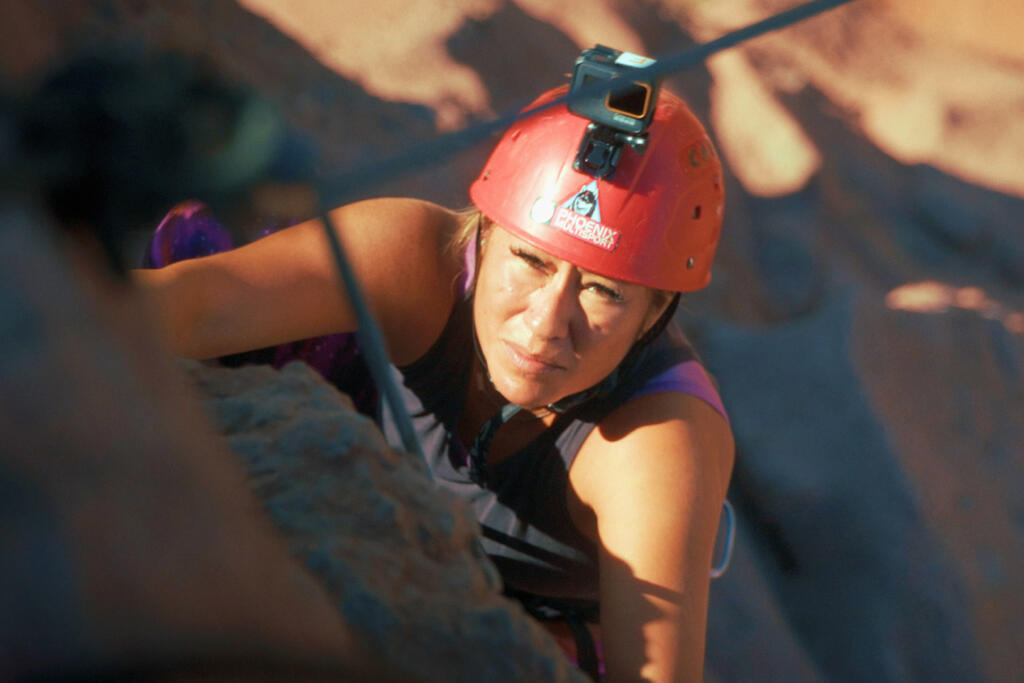
Then, she heard the cheers of encouragement from onlookers below, and her energy surged. In just a few minutes, Franklin was at the top of the rock, shouting “sober” into the red rock canyons around her.
“Nine months ago, I couldn’t get out of bed,” Franklin recalled. “Now, I’m standing here at the top of the mountain.”
That mountaintop was both literal and metaphorical for Franklin, as she reached the summit during her journey to sobriety — through the power of social connection.
The United States is facing a loneliness epidemic, with 1 in 2 people reporting they’ve experienced loneliness. For the 48 million individuals living with substance use disorder, that can make getting healthy and leading a fulfilling life much more challenging.
Amid this climate of isolation, The Phoenix, a national sober active community, brought its innovative model to Los Angeles at a time it was most needed — demonstrating the power of community in a disconnected world. Franklin’s journey of finding that community unfolds in the documentary "SOBER.”
A national sober movement 1 million strong
For Franklin, the Lizard Rock climb was a fitting analogy for her journey to sobriety.
“My head was saying, ‘I don’t want to do that,’” she said. “And I can relate that back to getting sober. I would say, ‘I don’t want to do that — it sounds hard.’ But it’s about seeing how far you can go, and that’s what sobriety is all about. You don’t know what getting to the top of the mountain will feel like until you do it.”
Franklin is not alone in her struggle. For individuals living with substance use disorder, the pandemic and resulting quarantines cut off opportunities for social connection and treatment, resulting in significant upticks in substance use and increases in deaths from overdoses. In Los Angeles County alone, accidental drug overdose deaths rose by 52% in the first 10 months of the pandemic.
The Phoenix has discovered that the transformative force of genuine connection and human resilience is the most powerful antidote to the loneliness and isolation driving the substance use epidemic. The organization has redefined what recovery looks like with a community-based approach that brings people together through fitness, creative expression, mindfulness, and relationships.
It has also sparked a nationwide sober movement that has directly affected over 1 million people.
Human connection and community are at the core of The Phoenix movement.
It’s working for people who might be left out of other treatment options. For context, relapse rates after treatment are generally between 40-60%. At The Phoenix, they’re 17%.
Through hundreds of weekly sober events and activities nationwide — from rock climbing to yoga, dance, weightlifting, and “paint and chill” classes — The Phoenix creates opportunities for all individuals to connect, build friendships, find support, and have fun. All that’s required is 48 hours of sobriety.
For Scott Strode, founder and executive director of The Phoenix, the journey to sobriety is a personal one.
“There’s something about crossing the finish line or standing on top of a mountain,” Strode, who overcame his own substance use disorder through community and physical fitness, said in a 2025 interview on “The Today Show.” “You can see something in yourself that you can’t see in the everyday, and then that starts to push out those [doubts] about your self-worth.”
Sign up for the Strong & Safe Communities newsletter for stories, ideas, and advice from changemakers working with their neighbors to address the biggest problems we face.
The reciprocal relationship between giving and healing
Throughout “SOBER,” Franklin offers intimate glimpses into her recovery. She described her upbringing as typical. She didn’t experience significant trauma or abuse.
“I drank alcohol because it was fun,” Franklin said. “That made it hard to see that it was a problem.”
Then, Franklin’s life took what she described as a “hard left turn” — losing her job and separating from her husband in one year. “Alcohol helped me to not think about that stuff,” she recalled.
But when she totaled her car while under the influence, she knew something had to change. “My sister said to me, ‘I don’t want you to die,’” Franklin recalled. “I told her, ‘I don’t either, but I don’t have control over this.’”
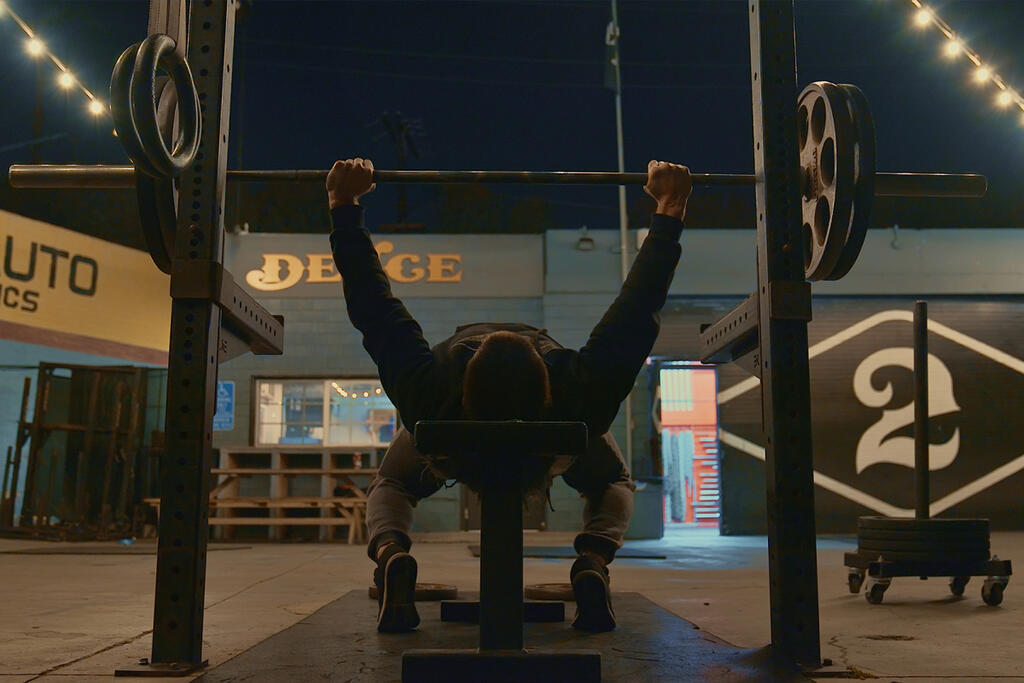
Franklin admits that her two-year road to sobriety has been a challenging one, filled with relapses and self-doubt. “I had never had more than six months of sobriety,” she explained. “I would’ve had it in January 2020, but I relapsed in December. Christmas is a hard time.”
Throughout those two years, Franklin has been surrounded by members of the Los Angeles Phoenix community, especially Charlene Chandler, who has become Franklin’s sponsor and friend.
“The pandemic hit Raelynn hard,” Chandler said. “But relapse is part of the journey.”
Franklin has unlocked what Strode calls the “intrinsic strength” inside all of us. She continued to attend the yoga classes, despite initially disliking them and wondering why anyone would do it. “It's just stretching,” Franklin said, laughing. She welcomed Chandler into her life and let her support and care for her. And she invited others into the Los Angeles Phoenix community. By helping others take their first steps toward recovery, Franklin has found that service isn’t separate from her sobriety — it’s a central component.
Healing with community
On July 4, 2021, Franklin reached a milestone: six months of sobriety. She marked the occasion by joining Chandler at a neighborhood bike parade. Once the parade ended and the women had packed up their bikes, Franklin grew concerned. Many in the crowd were drinking alcohol as they celebrated the July Fourth holiday. Rather than risk her sobriety and stay at the gathering, Franklin opted to head home and go on a run to clear her head.
That seemingly simple decision — to prioritize her sobriety and go for a run — demonstrates the power of The Phoenix’s model. And why it has profoundly affected more than 1 million people.
For decades, the dominant narrative around substance use recovery has assumed that people are broken and need fixing through a one-size-fits-all set of interventions. And while these interventions are effective for some individuals, it’s essential to have treatment options to ensure that recovery is possible for everyone. The Phoenix offers exactly that: a different path where healing happens with people. Over time, participants begin to see that their contribution to their community isn’t secondary to their recovery — it is their recovery.
Climbing the mountain together
This November, Franklin crossed the finish line of the New York City Marathon. “It was my ‘worst’ marathon finish time. But I had the best time,” Franklin said. She was running for every person who had ever felt alone in their struggle, as a way of reminding them that it's possible to start again, as many times as needed.
“It was an incredible experience,” Franklin continued. “The support from my family and friends, The Phoenix cheer section, and the crowd was incredible. I cried multiple times.”
Despite her initial skepticism about yoga, Franklin became a certified instructor and now runs classes at The Phoenix as a volunteer. She was also crowned Ms. Long Beach for her contributions to the city and the sober community.
The Phoenix’s Los Angeles community surpassed its opening goal of affecting 5,000 people and reached 20,000 in its first two years.
Franklin's journey is just one of those 20,000, and a reminder that the true measure of recovery can be found in connection, contribution, and community.
“SOBER” will be released in 2026.
The Phoenix is supported by Stand Together Trust, which provides funding and strategic capabilities to innovators, scholars, and social entrepreneurs to develop new and better ways to tackle America’s biggest problems.
Learn more about Stand Together's efforts to build strong and safe communities and explore ways you can partner with us.

More than a dozen photos show how NFL players, legends, and their families are making a difference.
How a community used Elevate USA’s national model to better support its students.
Humble Design harnesses the power of community to turn houses into homes.

Empowered Network shows what’s possible when survivors take charge of rebuilding their lives.