
As the Winter Paralympics open in Italy this March, spectators will witness elite athletes compete on snow and ice. What remains largely invisible is the training infrastructure that helped prepare some of those athletes to perform at the highest level.
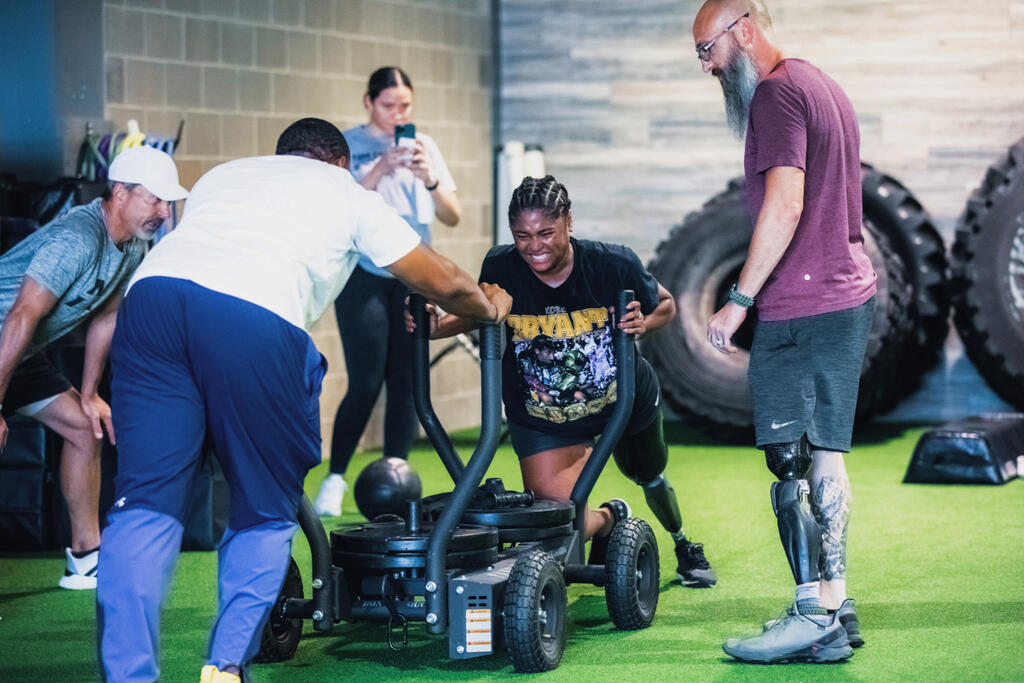
In a Texas facility far from the competition, the Adaptive Training Foundation is challenging a long-standing assumption in elite sport — that adaptive athletes must fit into systems never designed for their bodies or experiences. Instead, ATF builds training environments around the athlete, combining strength and conditioning, mental performance work, recovery science, and peer community.
That model has helped shape the trajectories of snowboarder Tyler Turner, a 2022 gold medalist with ambitions to return in 2026; and alpine skier Matthew Brewer, who competed at the 2022 games and continues to pursue elite competition. Their experiences suggest that breakthrough performance in adaptive sport isn’t just about working harder.
It’s about training differently.
Reshaping adaptive athletes’ dreams
For athletes who have lost a limb or experienced a traumatic brain or spinal cord injury, their world will never be the same. Not only are they faced with managing their physical recovery, but they also have to contend with a new reality — one where their belief in their abilities may falter as they navigate prosthetic limbs and wheelchairs and relearn daily routines.
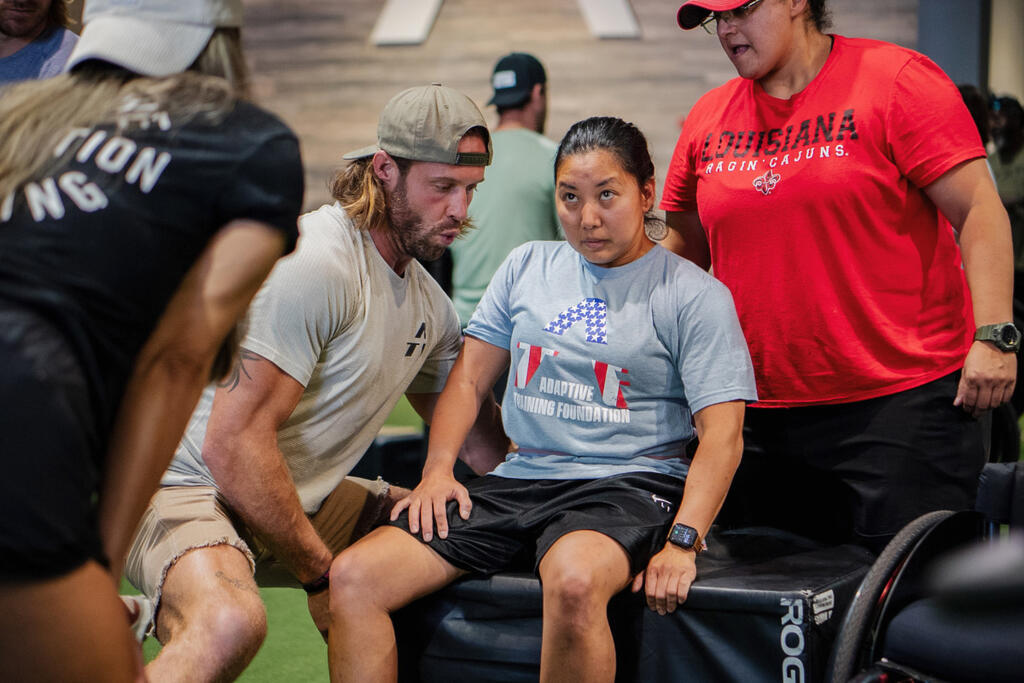
When they are ready to train again, adaptive athletes must confront a fragmented landscape with a lack of specialized training environments, limited community support, and insufficient coaching tailored to their needs.
That’s where ATF comes in.
ATF helps athletes regain not only their physical strength but also their true psychological strength. Founded by former NFL player David Vobora, ATF offers immersive training programs that blend strength and conditioning, sport-specific preparation, mental performance coaching, recovery science, and — critically — peer community.
The organization offers three no-cost programming tracks: ReDefine is a 10-week program focused on unlocking participants’ physical and mental potential; the Hyper program is for elite-level adaptive athletes striving for the podium in their respective sports; and the alumni program, Adaptive X, offers daily workouts, adventure experiences, and mentoring opportunities.
For Brewer and Turner, ATF’s model totally reshaped their Paralympic journeys.
Learning how to compete
Matthew Brewer’s cancer battle led him to a yearslong struggle with substance use disorder, resulting in the amputation of both legs. Despite recovering and training on his own through online adaptive sports communities, Brewer still felt he was missing something.
Turns out, it was ATF.
Living in Utah, Brewer couldn’t attend the 10-week ReDefine program in Texas, but when ATF introduced the 10-day Hyper program, he applied immediately.
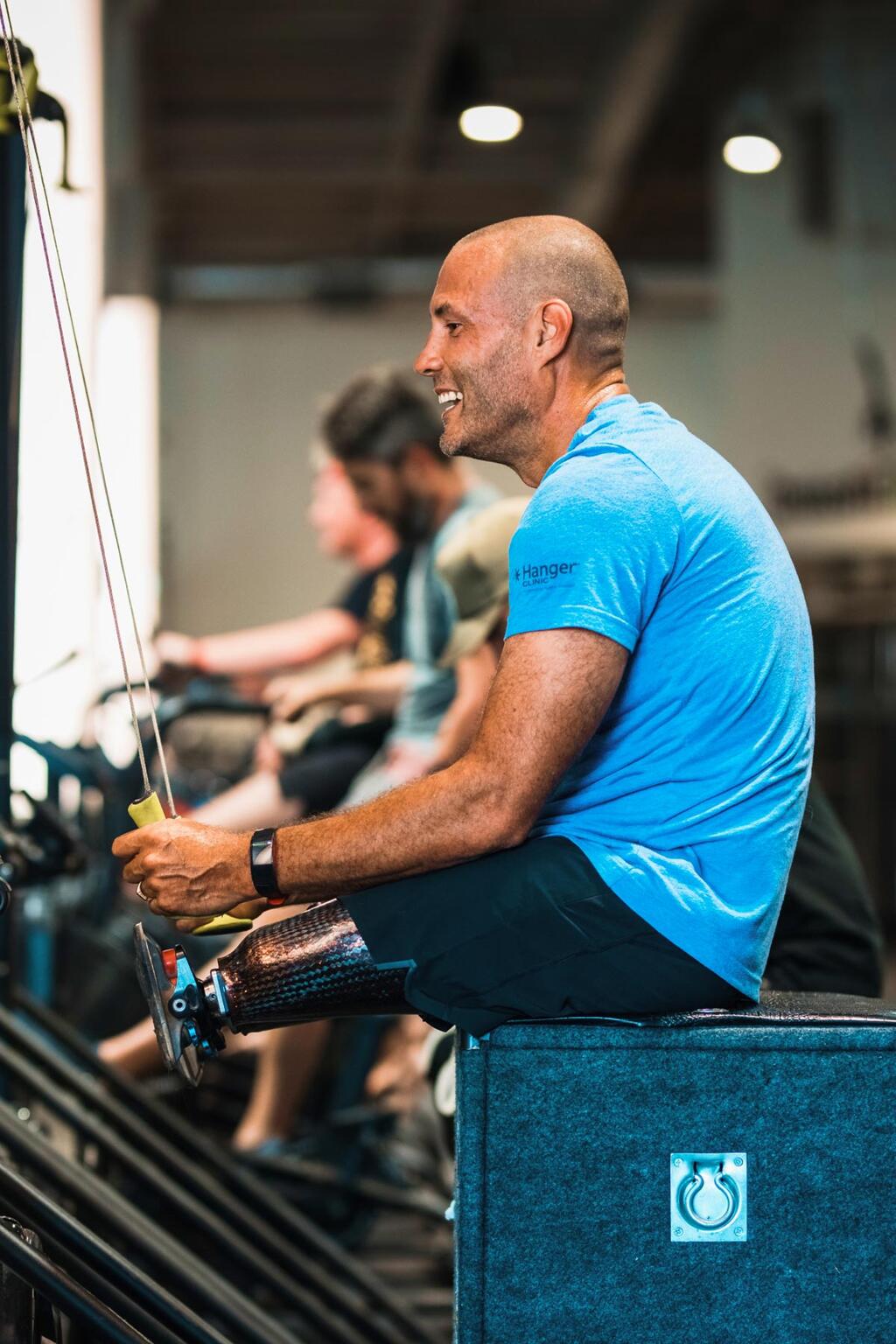
He arrived with a clear goal: to prepare his body as effectively as possible for the 2022 Paralympic Games in Beijing. What he didn’t expect was how profoundly the environment would shift his mindset.
Seeing other athletes with disabilities pushing themselves was eye-opening.
“I went to ATF to learn how to work out — but I left understanding how to compete,” Brewer said.
Brewer reached his goal and competed as a U.S. Paralympic alpine skier in Beijing. Currently recovering from a collarbone injury, he remains in contention for 2026 qualification and continues to compete at the highest levels of alpine skiing.
ATF’s approach goes beyond workouts. Coaches emphasize efficiency, recovery, and nutrition alongside strength. More importantly, ATF helped Brewer think differently.
“They taught me that my biggest limiting factor wasn’t my body,” Brewer said. “It was between my ears.”
Sign up for the Strong & Safe Communities newsletter for stories, ideas, and advice from changemakers working with their neighbors to address the biggest problems we face.
The road to Paralympic gold
ATF’s Hyper camp paired Brewer with other snow-sport athletes pursuing similar goals, like Tyler Turner.
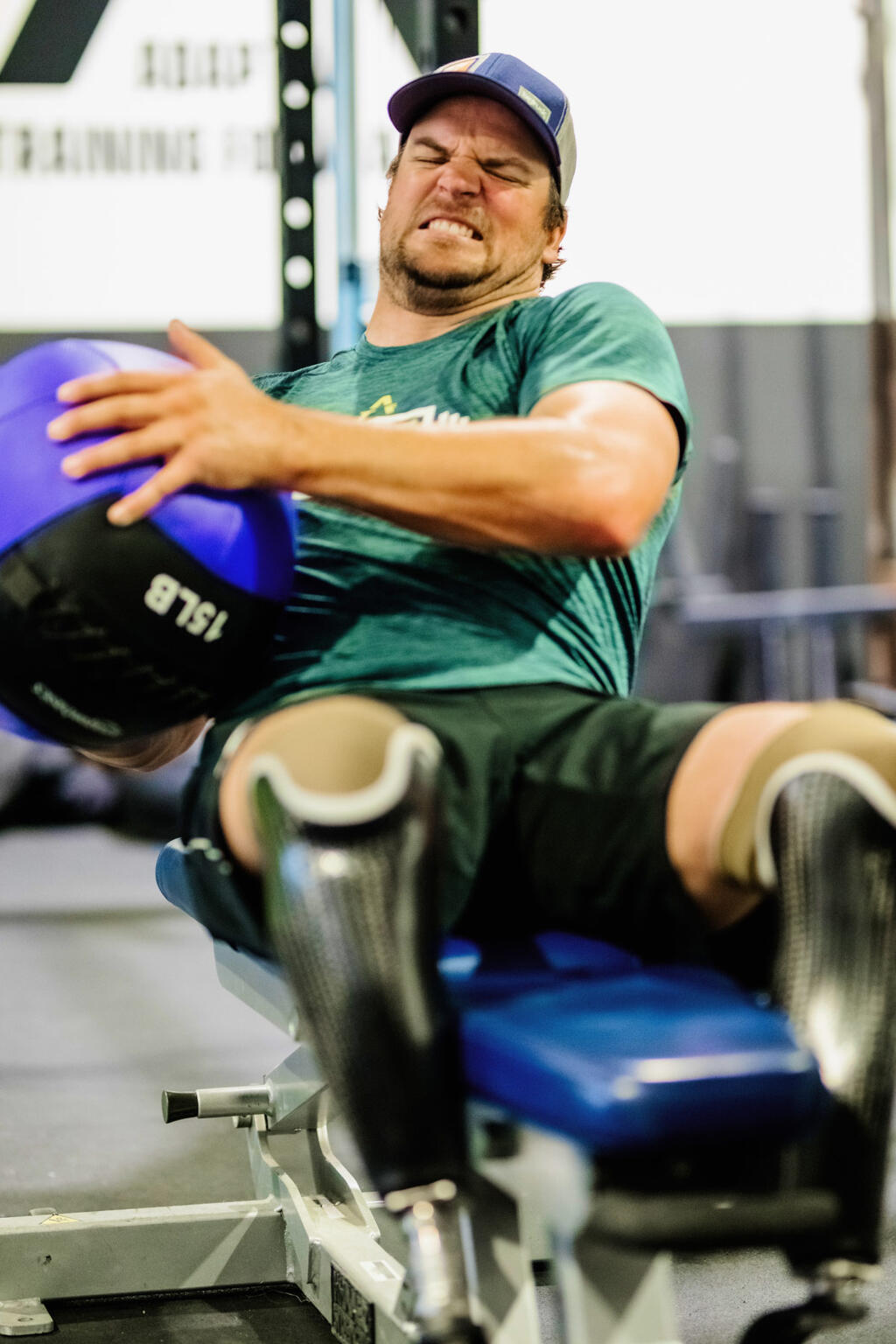
Turner lost his leg and suffered other traumatic injuries in a skydiving accident, followed by a second leg amputation less than two years later. When Vobora contacted him in the hospital after his first amputation, Turner wasn’t ready.
“I didn’t want to live with the cards I’d been handed,” he recalled candidly.
After Turner had time to process the trauma of his injuries, regain physical function, and begin imagining a future again, he answered when ATF called again. Five months after his second amputation, he arrived in Texas for the ReDefine program.
He left a different person.
ATF gave Turner something rare: uninterrupted time to focus entirely on rebuilding himself.
“Ten weeks where you can shut out the rest of the world,” he said. “That’s almost unheard of.”
Turner admitted that the training was relentless, with coaches pushing athletes to confront their perceived physical, mental, and emotional limits — something that doesn’t always happen with disabled individuals. ATF doesn’t treat adaptive athletes as fragile — it pushes them to discover limits they didn’t know existed, and then break them.
Within two years of his second amputation, Turner became a Paralympic gold medalist in snowboarding at the 2022 Beijing Games.
“I don’t know if I would have won a gold medal without ATF,” Turner said. “What they did early on — to get me from just surviving to elite performance — was unbelievable.”
It’s more than a gym — it’s a community
For Brewer and Turner, ATF’s impact extends well beyond the gym. Brewer remains connected to ATF, joining surf camps, outdoor excursions, and alumni activities.
That sense of continuity mirrors Brewer’s approach to mentorship and community. As a certified peer visitor and patient ambassador for a prosthetics company, he supports new amputees in navigating prosthetics, mobility, and identity after trauma. Brewer estimates that a majority of the people he mentors eventually try adaptive sports themselves.
I don’t know if I would have won a gold medal without ATF.”
Tyler Turner
For Turner, equally important for recovery protocols, mental performance work, and strength training is what happens outside formal training sessions. Being around other disabled athletes offered an opportunity to build trust through shared lived experience, and it’s a network Turner still relies on six years later.
“This community doesn’t end with the program. Years later, we’re still pushing each other forward,” Turner said.
Turner encourages athletes entering ATF to arrive with curiosity.
“Go in with an open mind,” he tells them. “You won’t use everything — but something will change how you approach your life.”
That ethos reflects ATF’s deeper paradigm shift. Instead of forcing athletes into systems that weren’t made for them, ATF builds systems around the athlete. And its approach challenges long-held assumptions about disability, performance, and potential. It suggests that when athletes are supported holistically — through physical training, mental resilience, recovery science, and community — they don’t just adapt. They excel.
The Adaptive Training Foundation is supported by Stand Together Foundation, which empowers individuals to reach their full potential through community-driven change.
Learn more about Stand Together's efforts to build strong and safe communities and explore ways you can partner with us.
More than a dozen photos show how NFL players, legends, and their families are making a difference.

Humble Design harnesses the power of community to turn houses into homes.
How a community used Elevate USA’s national model to better support its students.

Los Angeles’ Phoenix community is getting sober and reclaiming joy and strength.