
The United States spends far more on health care than other wealthy nations and the cost of even basic care continues to slip further out of reach each year.
So, where is all that money going and, more importantly, how do we lower costs?
Stand Together spoke with three medical experts who offered insight and promising alternatives to the current system.
The reasons health care is so expensive
To understand how we reached today’s unsustainable prices, we first have to examine the system’s incentives — and why they often work against patients.
There’s no single villain. The system is flawed, expensive, and tangled.
The United States spends almost $5 trillion a year on health care. That works out to an average of $14,570 per person.
“It’s going into a vast bucket of inefficiency,” said Dr. John Cochrane, senior fellow at the Stanford Institute for Economic Policy Research. Our current system, he said, is a study in constantly patching the unintended consequences of well-intentioned regulations.
Rather than rethinking the system, he said problems were met with layers of new rules, producing a complex and expensive structure. The result: inflated prices for patients.
Cochrane said insurance now dominates even routine care, inflating medical bills and hiding prices from patients. Without upfront transparency, patients can’t compare options or make cost-conscious decisions.
Introducing: Doctors with transparent pricing and lower costs
The Surgery Center of Oklahoma offers a promising alternative. The center publishes a fixed price on its website for every procedure — and those prices are a fraction of what hospitals typically charge for the same procedures.
The center doesn’t accept insurance and doesn’t have a huge administrative staff. The $6,836 it charges for a gallbladder removal is what it costs to take out someone’s gallbladder. That includes the facility, the equipment, the anesthesia, and the surgeon.
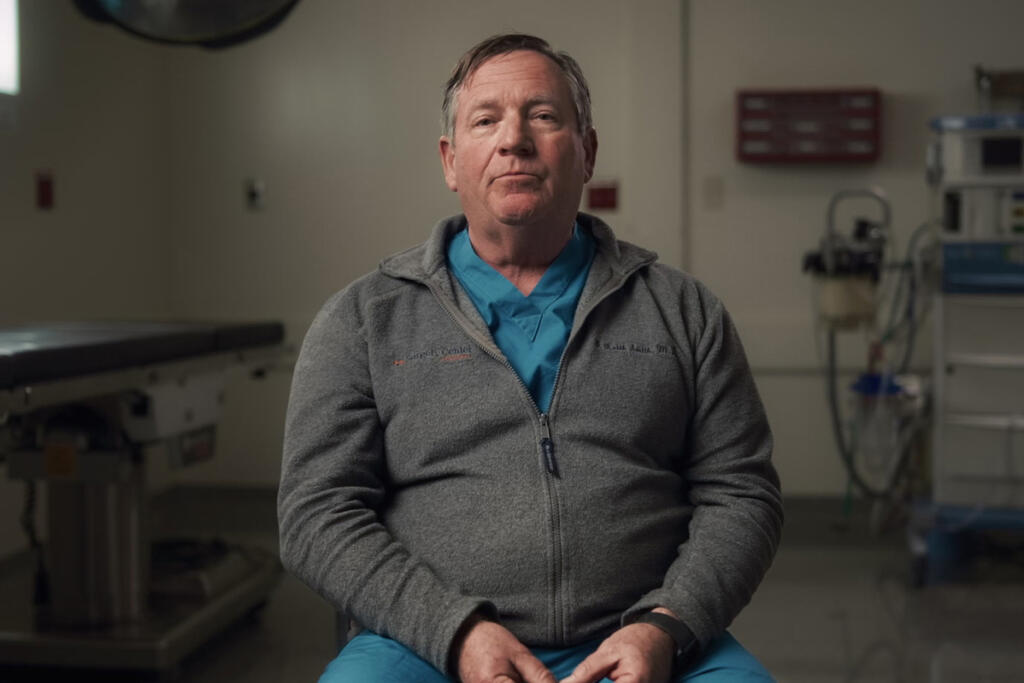
“You can add all that up,” said Dr. Keith Smith, anesthesiologist, founder of the Surgery Center of Oklahoma, and cofounder of the Free Market Medical Association. “This is not complicated, but the real reason [hospitals] don’t want to do it is that so many profit from the dysfunction in the industry.”
Here’s a scenario that illustrates the problem. A patient has a procedure in a hospital, which charges the insurance company $100,000. The insurance company discounts the bill to $20,000 and claims to have saved the patient $80,000.
Smith said the hospital is happy to write off that $80,000 to justify its not-for-profit status and then the insurance company charges a commission.
“The insurance company really would rather have received a $200,000 bill,” Smith said. “They want very much to accept large bills and discount those bills and skim off the difference.”
It’s a common practice. Hospitals inflate their prices, insurers negotiate them down, and both sides profit. In short — the bigger the bill, the more everyone gets paid.
“Insurance is a great idea,” Smith said. “It’s meant to help us with areas of our lives that are uncertain, but we need the insurance companies to get back in the business of providing insurance.”
Sign up for the Stand Together newsletter and get stories, ideas, and advice from changemakers to help you tackle America’s biggest problems.
What could drive down health care prices? Competition.
Currently, providers, hospitals, and clinics rarely compete with each other for business, and therefore don’t have an incentive to find ways to serve patients better at lower prices.
“You need an underlying competitive market,” Cochrane said. “It’s the supplier competition that is really the important part in driving low costs and better quality.”
In other words, when providers must compete for patients, prices fall and quality rises. Today’s system, full of heavy regulations and opaque pricing, prevents competition.
He also said insurance needs to be flexible — both in the type and amount of coverage patients actually need. Right now, companies provide benefits you will never need, which drives up the cost rather than focusing on personalized service.
Direct primary care: More care, lower cost
One fast-growing solution is direct primary care, a membership model that removes insurance from everyday care and reduces costs.
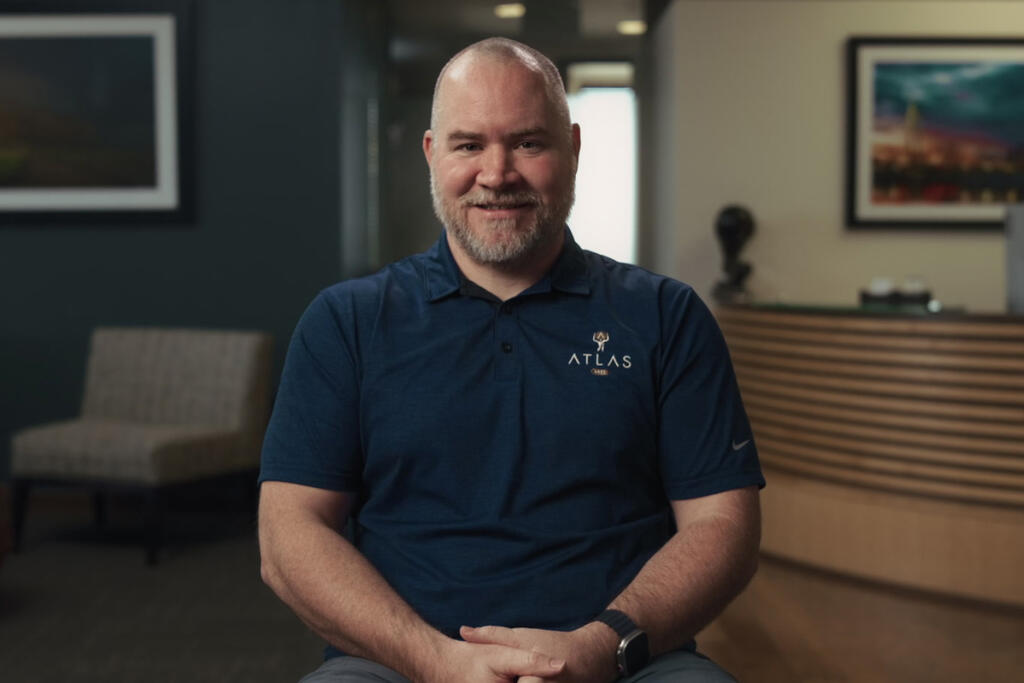
Dr. Josh Umbehr, a family physician in Wichita, Kansas, runs Atlas MD Family Practice, which provides direct primary care for families. Its insurance-free membership model charges people a small monthly fee for a broad range of services, such as 24/7 care, unlimited visits with no copays, free procedures, and labs and medications billed at wholesale prices.
“More care, more often, for less money,” Umbehr said. “Because that's the practice of medicine. It’s not just the diagnosis, but it’s helping them get the treatment.”
Umbehr said we currently use insurance in the wrong way, trying to insure everything when actual health care medications, labs, EKGs, and other components of care are actually quite affordable. For example, an EKG in his office costs 40 cents.
“Why am I billing your insurance for the EKG?” Umbehr said. “It’s as ridiculous as it sounds. Our big mission is to make most health care too cheap to insure.”
Insurance is a risk-management tool, he said, not a payment model. We’re trying to use insurance that costs $2,000 a month to pay for medicines that cost 2 cents a day.
“We don’t try to buy gasoline with car insurance, or lawn care with home insurance, or groceries with life insurance,” he said. “It’s not that insurance is bad; it’s really more prepaid medical than it is an insurance product.”
The potential for savings is huge. The national average for insurance premiums per family exceeds $25,000 per year. Umbehr said about 80% of that could be managed with a direct-care membership, which costs about $1,500 per year.
An optimistic outlook for the future
The direct-care model is expanding rapidly. Umbehr said that when they opened their office in 2010, there were just a handful of clinics employing the model. Today, there are more than 2,500, with 30–40 more popping up every month, he said.
“It’s amazing momentum, considering how slow the ship of health care turns,” Umbehr said. “And it’ll keep turning, because patients don’t like the model they’re in. Doctors don’t like the model they’re in. Employers don’t like paying for this model.”
Unfortunately for most Americans, health care isn’t getting cheaper anytime soon. The good news, however, is that these solutions are proving that lower-cost, high-quality care is possible. They provide a roadmap for how a system based on transparency, direct care, and competition could rebuild a stronger health care system for all.
“Everyone deserves to have health care for dollars a month,” Umbehr said. “And I believe fixing health care is possible if we put the patient first.”
The Stand Together community partners with changemakers who are tackling the root causes of America’s biggest problems.
Learn more about Stand Together’s health care efforts and explore ways you can partner with us.

Most new drugs are developed in the United States. Here’s why.

Started by NFL legend Greg Olsen and his wife, The HEARTest Yard brings care to children with heart defects.

What if the key to improving Gen Z’s mental health lies in leveraging AI?

Mental health care is too narrow, possibly worsening the crisis. These changemakers have a plan.