
Emma Camp went to college eager to debate and be challenged by intellectual diversity.
“Instead, my college experience has been defined by strict ideological conformity,” Camp explained in an essay for The New York Times. “Students of all political persuasions hold back — in class discussions, in friendly conversations, on social media — from saying what we really think.”
Her experience at the University of Virginia captures a quiet but widespread phenomenon: It’s not formal bans or official policies that silence many voices — it’s a culture that subtly discourages dissent. Students across the ideological spectrum defer, censor, or self-police because the stakes of speaking up feel too high.
Universities have long been hailed as prestigious institutions where ideas collide, evolve, and sharpen our understanding of the world. That process requires the courage to ask difficult questions, explore unpopular viewpoints, and express honest opinions — without fear of reprisal or exile.
But in recent decades, fear of backlash — whether through social media, protests, or administrative pressure — has made many institutions more risk-averse. The result is a shrinking marketplace of ideas, even in places designed to teach critical thinking. It raises the question: Can certain universities be considered “prestigious” when the very thing they were created to represent — intellectual formation — is stifled?
Adding to rising concern is the recent assassination of Charlie Kirk at Utah Valley University while he was facilitating the very thing a university life should foster — open debate and dialogue. In an unfathomable instant, a university courtyard — a space meant for curiosity and discovery — became a scene of fear and loss. While violence of this nature isn’t widespread, this is not the first time in recent years that a campus speaker has been physically attacked while speaking.
Experiences like Camp’s and the Charlie Kirk tragedy underscore what new research makes clear: If we want Americans to continue to find connection through shared principles, we must safeguard one of those principles — free speech.
Sign up for the Stand Together newsletter and get stories, ideas, and advice from changemakers to help you tackle America’s biggest problems.
The data behind the decline in free expression
Drawing from more than a decade of surveys and rankings, a recent report from the Foundation for Individual Rights and Expression — “Campus Pulse Check: Reviewing One Decade of University Priorities” — offers a sobering look at the state of free speech and open inquiry on America’s campuses.
Nearly half of students say they don’t feel comfortable sharing their perspectives on controversial political topics in class. In some universities, fewer than 3 in 10 feel free to speak openly. That’s not just a statistic — it’s a measure of lost potential. When people withhold their honest thoughts, classrooms become echo chambers instead of incubators for growth.
Intellectual diversity isn’t about partisan balance — it’s about ensuring that every student encounters a wide range of ideas and learns to reason through disagreement.
The imbalance among faculty and students when it comes to ideological beliefs is staggering: About 59% of faculty and roughly half of students identify as liberal, compared with 18% of faculty and 16% of students who identify as conservative.
More concerning, on some campuses, 1 in 3 students believe violence is acceptable to silence a speaker they disagree with. In certain schools, that number climbs to above 50%. (This data was collected and published before Charlie Kirk’s death)
When force becomes an acceptable substitute for argument, education loses its purpose. True learning requires listening — even when the ideas make us uncomfortable.
These findings point to both a problem and an opportunity. The problem is that universities risk trading real education for comfort when they discourage dissent. The opportunity is just as clear: Institutions that protect free expression and foster principled disagreement will stand apart as engines of progress where ideas are tested in pursuit of knowledge.
"All eyes are on higher ed at the moment,” said Alisha Glennon, chief operating officer at FIRE, “so now is the time for all who care about our universities and the special role they play in society to come together and do the right thing: Free our universities from censorship and group think and embrace the values of liberalism and tolerance that make our institutions the best in the world.”
And the stakes are high. When students stay silent, and inquiry bends to orthodoxy, prestige starts to lose its meaning. More families are asking whether a university name still guarantees what it once did — a place to think freely, grow intellectually, and prepare for the real world. Without real cultural change, higher education may lose the very thing that once made it essential.
Read the full report: Campus Pulse Check: Reviewing One Decade of University Priorities
Foundation for Individual Rights and Expression (FIRE) is supported by Stand Together Trust, which provides funding and strategic capabilities to innovators, scholars, and social entrepreneurs to develop new and better ways to tackle America’s biggest problems.
Learn more about Stand Together’s efforts to defend America’s constitutionally limited government and explore ways you can partner with us.

What happens when AI starts shaping our thoughts — and someone decides to fight back with code?
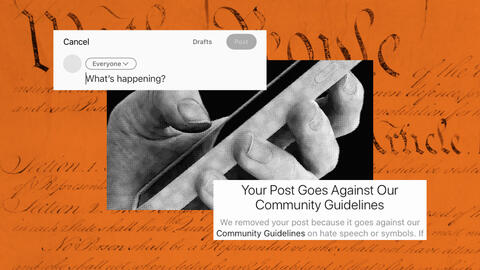
Here's why users should moderate social platforms themselves.
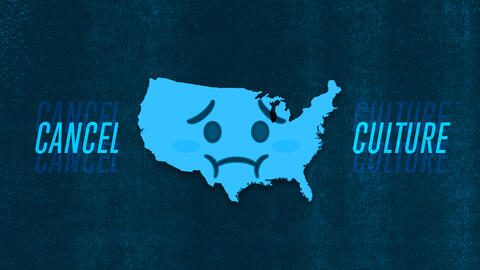
Greg Lukianoff and Rikki Schlott’s new book The Canceling of the American Mind dives into cancel culture’s origins and ways to fight it.

Protecting free speech online is vital. Free speech expert Jacob Mchangama shares how the U.S. can do that.