
Earning a sustainable wage can support a family, buy a home, and keep debt at bay.
But for many young people, the path to a well-paying career is long, uncertain, and full of obstacles.
One West Virginia school is offering a different way.
The WIN Academy at BridgeValley Community and Technical College redefines what high school can be. It launches students into high-demand, well-paying careers like nursing, advanced manufacturing technology, and information technology systems early, so they can start making real wages.
This model could reshape the high school experience and unlock brighter futures for both students and their communities.
A practical path forward for high school students
College is a good path for some, but not all. For millions of high school graduates, the choice is sometimes: a college they can’t afford, or jobs with wages they can’t live on.
Meanwhile, critical industries are desperate for skilled workers.
The WIN Academy bridges those gaps with an early-college high school model that benefits both students and employers.
Designed for 11th and 12th graders, it allows students to complete their associate degree while earning their high school diploma.
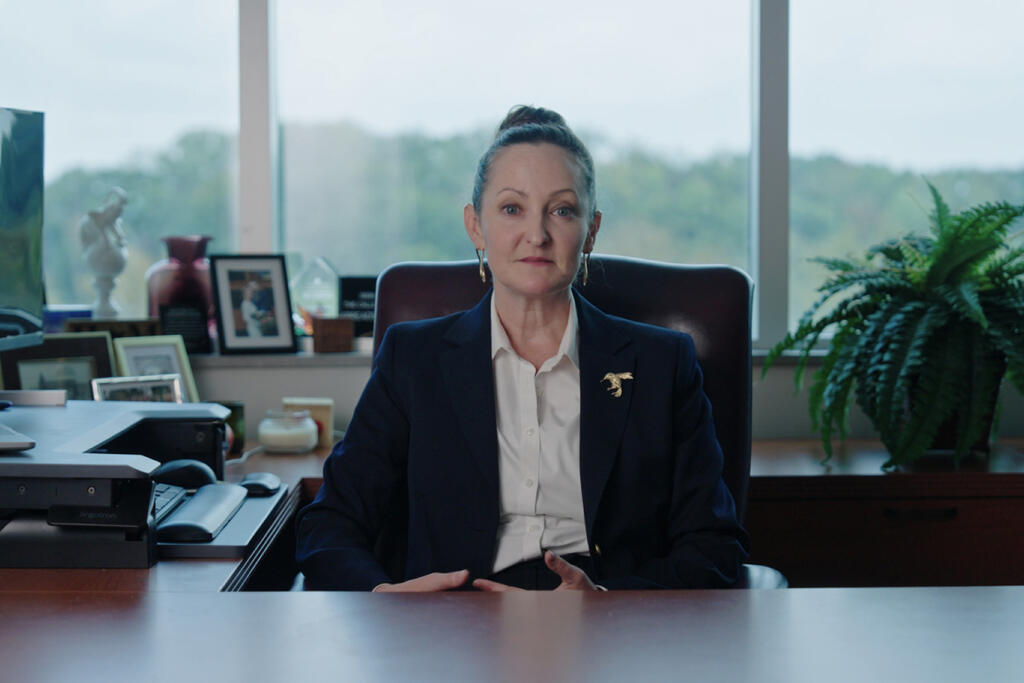
“The real practical way that’s going to get somebody into school: they need to be able to feed their family,” said Casey Sacks, president of BridgeValley Community and Technical College. “If they need to make money, saying, ‘Go study for four years and good luck’ is just a horrible strategy, especially when you’re talking about people who may be in a poverty situation.”
Traditionally, students graduate high school and spend an additional year or two — and thousands of dollars — on prerequisite courses before they can even take a nursing class. Often, they haven’t taken the right biology or math classes in high school.
The WIN Academy helps students meet the right prerequisites before they graduate.
“So our high school students who come in and say, ‘I want to be a nurse,’ start with microbiology that’s required for the nursing program, and they do that as their high school biology class,” Sacks said. “The WIN Academy lets them take a full load of college courses, so they’re completely set up to be ready to go into the nursing program once they’ve met their prerequisites.”
Meeting community needs, starting with nursing
A dire, ongoing nationwide shortage has driven the WIN Academy’s focus to prepare students for careers in nursing. According to Kelli Bailey, vice president of nursing and chief nursing officer at West Virginia University Medicine, there were an estimated 193,000 open nursing-related positions in the United States in 2025. That’s estimated to grow to over 500,000 by the year 2030.
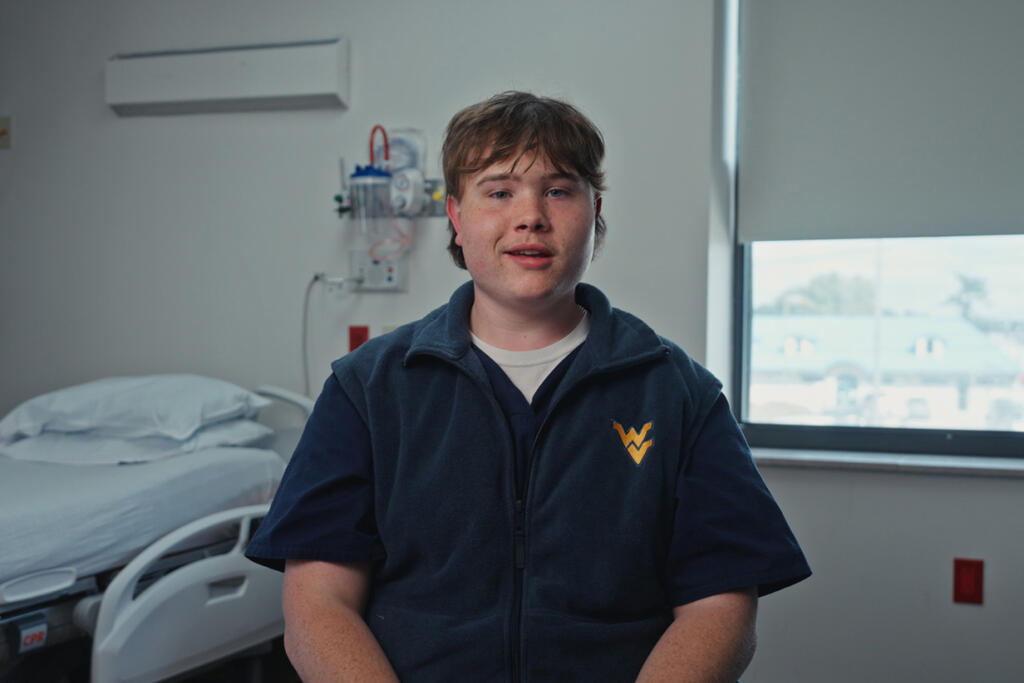
Kaden Thaxton was in the first graduating class of the WIN Academy. He’s just 19, but already working as a nurse and fulfilling his lifelong dream to pursue a career in health care.
“I just inherently feel inclined to help other people and make sure they have what they need,” Thaxton said. “Before I knew about the WIN Academy and the opportunities that it provided, I was looking at maybe going to bigger universities, but it would have definitely put a lot more of a financial strain.”
Thaxton started his nursing job just one month after graduating from the WIN Academy, when most of his friends were starting their sophomore year of college.
Sign up for Stand Together's K-12 newsletter and get stories, ideas, and advice from changemakers who are transforming education across the country.
Sacks said Thaxton thrived because he knew he wanted to be a nurse, and he went through the program as quickly as he could. He was intentional about it all.
“Our design is based on intentionality,” Sacks said. “And so, if you know what you want to do, and you put in the work, you can do it in 18 months. It doesn’t have to take four years. With as much as we need nurses in this community, it doesn’t make sense to say, ‘Hey, why don’t you spend longer to try and learn these skills?’”
Some skeptics might think students are taking a shortcut into nursing by going through the program, but Sacks said that couldn’t be further from the truth.
“If this was truly a shortcut, then you would see students not passing their boards,” Sacks said. “What we’ve seen instead is that our nursing program consistently wins awards for being the best community college nursing program in the state.”
If you know what you want to do, and you put in the work, you can do it in 18 months. It doesn't have to take four years.”
Casey Sacks
President of BridgeValley Community and Technical College.
The payoff for graduates is enormous.
“If we as a country could radically reimagine what school looks like for learners, especially in high school, you could change America so much for the better,” Sacks said.
The model has proven successful in communities across the country and has enormous potential to change high school in the United States.
“We’ve seen over and over across the country that that’s an amazing model for kids,” Sacks said. “And so what we ought to be doing is giving any kid who wants it the opportunity to be in early-college high school. Let’s start with what we already know is a best practice, and really try to ramp that up. If something like the WIN Academy could scale across the country, we could have a huge economic impact. We really, as a country, can back skills into high school and make the learning opportunities much more meaningful to students.”
The WIN Academy is supported by Stand Together Trust, which provides funding and strategic capabilities to innovators, scholars, and social entrepreneurs to develop new and better ways to tackle America’s biggest problems.
Learn more about Stand Together's education efforts and explore ways you can partner with us.

Virginia Walden Ford’s fight for her son helped change the education landscape.

How real-world experience helps students discover purpose before graduation.

This is what a new era of educational transformation could look like.

In a time when people feel polarized, this platform teaches students to disagree constructively.